History of Shirdi Before Sai Baba: The Untold Story of a Quiet Village
This article explains how Shirdi was a small, unknown rural village in Maharashtra, its social and religious life, living conditions, and how an ordinary settlement later transformed into one of India’s holiest pilgrimage destinations.
SHIRDI & PILGRIMAGE
Abhijeet Pandey
1/20/20262 min read
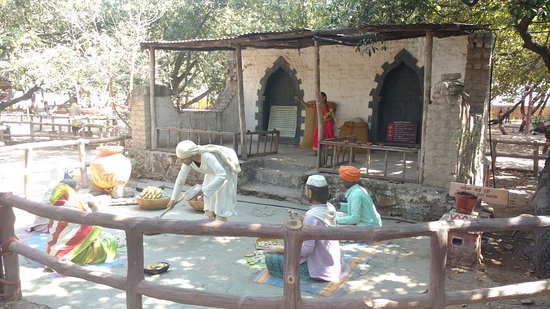
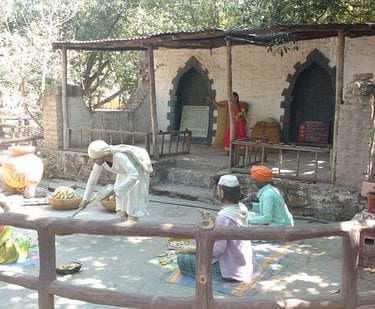
Today, Shirdi is known worldwide as a sacred town associated with Sai Baba of Shirdi. Millions of devotees visit every year. However, before Sai Baba’s arrival, Shirdi was an obscure and modest village with no religious or historical importance. Its transformation is one of the most remarkable spiritual journeys in Indian history.
Shirdi as a Small Rural Village
Before the mid-19th century, Shirdi was a tiny agrarian settlement in the Ahmednagar district of Maharashtra. The village population was small, and life revolved around farming, cattle rearing, and seasonal labor. Houses were made of mud and stone, roads were unpaved, and basic facilities were almost nonexistent.
There was no economic activity beyond agriculture. Shirdi was not connected to trade routes and had no reason to attract travelers or pilgrims.
Religious and Cultural Life
Religious life in Shirdi before Sai Baba was simple and local. Villagers worshipped small Hindu deities and village gods, mostly linked to nature, rainfall, and crop protection. Festivals were modest and community-focused.
A small Muslim population lived alongside Hindus, and the village followed a peaceful coexistence. However, Shirdi did not have any major temple, mosque, or religious institution that could make it spiritually significant.
Dwarkamai Before Its Sacred Status
Dwarkamai, which later became the spiritual center of Shirdi, was originally an old and neglected mosque. It was partially damaged and unused for formal worship. Villagers saw it as an abandoned structure rather than a holy site.
No one could have predicted that this broken building would later become one of the most revered spiritual spaces in India.
Social Conditions and Daily Life
Life in Shirdi was difficult. The village frequently faced droughts, food shortages, and poverty. Medical facilities were absent, education was rare, and people relied heavily on traditional beliefs and customs.
Caste divisions were present, and social boundaries were rigid. Most villagers lived a hard but routine life, unaware that their village would one day gain global recognition.
Shirdi’s Obscurity in Historical Records
Before Sai Baba’s time, Shirdi found little or no mention in historical texts, religious scriptures, or travel records. It was one of countless unnoticed villages in the Deccan region.
This lack of historical importance highlights how extraordinary Shirdi’s later spiritual transformation would become.
The Turning Point
When Sai Baba arrived in Shirdi as a young fakir, the village was unprepared for change. Initially, villagers were doubtful and indifferent. Over time, his presence slowly influenced their thinking, behavior, and beliefs, laying the foundation for Shirdi’s spiritual identity.
This moment marked the end of Shirdi’s obscurity and the beginning of its sacred legacy.
Before Sai Baba, Shirdi was an ordinary rural village with no fame, no pilgrimage, and no spiritual recognition. Its people lived simple, challenging lives shaped by agriculture and tradition. The rise of Shirdi as a holy place proves that spiritual greatness does not depend on location but on the presence of a divine soul.
Understanding Shirdi’s history before Sai Baba makes its transformation even more powerful and meaningful.
Read More:
History of Shirdi before Sai Baba
Dwarkamai significance in Sai Baba's life
What is the Chavadi procession in Shirdi